Texas is experiencing continued demand for reliable, high-speed internet as expanding communities, commercial developments, and industrial facilities depend increasingly on digital connectivity. Behind every successful fiber optic installation is an extensive planning process that involves more than cables, construction equipment, and advanced telecommunications technology.
One of the most important elements of that process is securing legal access to the land where fiber infrastructure will be installed. Fiber optic right-of-way acquisition in Texas helps telecommunications providers establish the property rights necessary to construct, operate, maintain, and expand their networks.
Without clearly defined land rights, even a technically sound fiber optic project can encounter unexpected delays, property disputes, and costly construction changes. Understanding how right-of-way acquisition supports network expansion is therefore essential for telecommunications companies, utility providers, developers, and infrastructure project managers throughout Texas.
Why Fiber Optic Network Expansion Matters in Texas
Supporting Growing Communities and Businesses
Texas continues to attract residential development, commercial investment, and industrial activity that increase demand for dependable communications infrastructure. Fiber optic networks help support these developments by transmitting large volumes of information over long distances with high capacity and low signal degradation.
In growing communities around Houston, Katy, Dallas-Fort Worth, Austin, and San Antonio, new residential subdivisions and commercial properties often require telecommunications infrastructure that connects efficiently with existing networks. Extending fiber service into these areas may involve crossing multiple properties, coordinating with utility operators, and securing access through established transportation corridors.
Fiber also supports essential operations such as healthcare communications, education, emergency response systems, cloud computing, and business connectivity. As these services become more dependent on reliable networks, the physical infrastructure connecting Texas communities becomes increasingly important.
Expanding Connectivity in Rural Texas
Rural Texas presents a different set of challenges because homes, businesses, and public facilities may be separated by considerable distances. Fiber routes serving these communities can cross agricultural land, ranches, waterways, railroad corridors, and properties with complicated ownership histories.
Although rural construction may encounter fewer congested utility corridors, it can require extensive landowner coordination and additional planning for access across large parcels. Each property crossing introduces questions about legal rights, existing easements, installation methods, and future maintenance responsibilities.
Successful rural broadband deployment depends on aligning network engineering with practical land-access solutions. A route that appears efficient on a map may become difficult to construct if the necessary property rights cannot be secured.
Understanding Fiber Optic Right-of-Way Acquisition
What Is Right-of-Way Acquisition?
Right-of-way acquisition involves obtaining or confirming the legal rights necessary to access and use land for a specified infrastructure purpose. For fiber optic projects, these rights may authorize telecommunications providers to install underground cables, occupy permitted utility corridors, attach facilities to existing structures, or enter property for maintenance.
A right-of-way does not always involve purchasing an entire property or obtaining exclusive ownership of the land. Instead, the appropriate arrangement may consist of a utility easement, license agreement, access agreement, lease, or another legally recognized property interest.
The specific rights required depend on the proposed facilities, property ownership, applicable laws, and intended duration of use. Properly identifying those requirements prevents confusion between physical access to a location and the legal authority to install telecommunications infrastructure there.
How Fiber Optic Easements Work
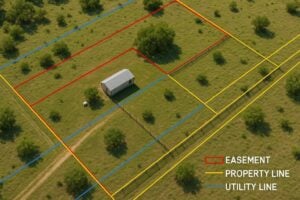
A fiber optic easement generally establishes defined rights to use another party’s property for telecommunications infrastructure while the property owner retains ownership of the underlying land. The agreement may identify the permitted route, installation area, access conditions, maintenance rights, and restrictions affecting the property.
For example, a provider extending a fiber network across privately owned commercial land may need an easement allowing underground cables to remain in place after construction. The agreement should also address whether the provider can enter the property later to inspect, repair, replace, or upgrade its facilities.
Not all existing utility easements automatically authorize telecommunications installations, even when other utilities already occupy the same area. The original documents must be reviewed to determine whether the proposed fiber use is within the rights previously granted.
Why Land Rights Are Essential to Fiber Network Development
Establishing Legal Access Before Construction
Fiber optic infrastructure is designed to operate for years, making reliable land rights essential to the network’s continued use. A project that relies on incomplete property permissions may face disputes after construction begins or after ownership of the affected land changes.
Obtaining appropriate rights before installation helps establish where facilities may be located and what activities are permitted. It also creates a clearer framework for future repairs, expansion, and coordination with the property owner.
Temporary construction access should not be confused with permanent operating rights. A landowner’s permission to allow crews onto a property for a limited period does not necessarily authorize the continued presence of buried cables or permanent telecommunications structures.
Protecting Long-Term Network Reliability
Fiber networks must remain accessible throughout their operational lives because damaged cables, equipment failures, and changing service requirements can demand future work. Land-rights agreements that address ongoing maintenance can reduce uncertainty when those situations arise.
Consider a fiber line installed along the edge of a commercial property where a future building expansion may be planned. If the easement’s location and restrictions are unclear, the property owner’s development plans could conflict with the telecommunications infrastructure.
Accurate documentation creates a more predictable relationship between the landowner and the network operator. That predictability benefits both parties by clarifying permitted activities and helping them plan around existing facilities.
The Fiber Optic Right-of-Way Acquisition Process in Texas
Step 1: Preliminary Route Planning
The acquisition process begins with evaluating potential routes between network connection points, service areas, and supporting infrastructure. Engineers and land-rights professionals consider distance, terrain, existing utilities, construction feasibility, and the number of properties requiring access.
A shorter alignment is not always the most practical option when it crosses difficult terrain or numerous privately owned parcels. Alternative routes may offer better construction conditions, clearer ownership records, or access to existing utility infrastructure.
Early planning can also identify railroad crossings, waterway crossings, highway facilities, and other locations requiring specialized review. Recognizing these constraints before final design helps limit expensive revisions later in the project.
Step 2: Property Ownership and Title Research
Once potential routes have been identified, property records help determine who owns the affected land and whether existing agreements influence its use. Research may involve county deed records, subdivision plats, recorded easements, title documents, and relevant public-property information.
Property ownership can be complicated by inheritance, corporate ownership, multiple interest holders, or changes that are not immediately apparent from available mapping data. Verifying the parties authorized to grant access is therefore an important part of telecommunications land-rights acquisition.
Title research also helps identify restrictions that could affect installation, including previously recorded utility rights and access limitations.
Step 3: Surveying and Route Verification
Surveying helps connect proposed engineering plans with the actual boundaries and physical conditions of the affected properties. Depending on the project, survey deliverables may establish property lines, prepare easement descriptions, or document improvements and other features near the proposed installation.
Accurate legal descriptions are particularly important when a permanent easement will be recorded. An unclear description can create uncertainty about where the telecommunications provider is authorized to install and maintain its facilities.
Survey information also helps identify situations where the proposed alignment conflicts with fences, buildings, drainage features, or existing utility structures. Resolving these issues during planning is generally more manageable than discovering them after construction equipment arrives.
Step 4: Landowner Negotiation and Agreement Execution
After the required property interests are identified, negotiations can begin with the appropriate owners or authorized representatives. Discussions may cover easement boundaries, access routes, restoration obligations, compensation where applicable, and other conditions specific to the property.
Clear communication is particularly important when a fiber corridor affects agricultural operations, commercial access, landscaping, or future development plans. Addressing these concerns early helps establish reasonable expectations and provides an opportunity to explore practical adjustments.
Once an agreement is reached, the parties can complete the necessary documentation and recording steps appropriate to the transaction. Legal counsel should evaluate the instruments and confirm that the agreed terms adequately reflect the intended property rights.
Public vs. Private Right-of-Way Access
Fiber Installation Within Public Corridors
Public roadways often provide potential routes for telecommunications networks because they connect communities and existing infrastructure. However, public access does not automatically mean that every provider can install facilities anywhere within a roadway corridor.
The authority responsible for the right-of-way may impose design, safety, location, restoration, and permitting requirements. Depending on the route, the reviewing entity might be the Texas Department of Transportation, a municipality, a county, or another organization with applicable authority.
For state highway rights-of-way, the Texas Department of Transportation administers utility accommodation requirements and provides an online system for relevant utility permitting activities.
Fiber Installation Across Private Property
Private property crossings require careful examination of the legal basis for access and the scope of the proposed installation. A telecommunications provider may need to negotiate an easement or other agreement when existing rights do not authorize the intended facilities.
The nature of the property can influence the negotiations because residential, agricultural, commercial, and industrial properties have different operational concerns. A crossing near a commercial loading area may require different construction protections than a route across open ranchland.
Landowners may also seek clarity about surface disturbance, restoration standards, future access, and whether telecommunications equipment will interfere with planned improvements. Clearly documented agreements help both parties understand those obligations.
Texas Regulations Affecting Fiber Optic Installations
State Highway Utility Accommodation Requirements
Fiber optic installations within Texas state highway rights-of-way are subject to applicable TxDOT utility accommodation rules and procedures. These requirements address matters such as facility placement, construction methods, clearances, and coordination with transportation infrastructure.
Texas Transportation Code Section 250.002 establishes a framework for accommodating qualifying broadband-only providers within state highway rights-of-way, subject to highway purposes and applicable rules. Eligibility and the conditions of access must be evaluated for the specific provider and project rather than assumed.
TxDOT’s published broadband guidance advises applicants to allow at least 90 days for a utility permit, although actual review periods can vary.
Existing Electric Utility Infrastructure and Middle-Mile Fiber
Some fiber projects involve existing electric utility systems, including lines and structures already located within established utility easements. Texas Utilities Code Chapter 43 contains special provisions for qualifying middle-mile broadband service provided through electric delivery systems.
Section 43.053 addresses circumstances in which additional easements or consideration may not be required, subject to statutory conditions and property-owner protest rights. The law also includes notice provisions that require careful attention before eligible construction proceeds.
These provisions should not be interpreted as universal permission for every telecommunications provider to use an existing electric easement. The applicable statute, provider status, proposed use, and underlying property rights must be examined together.
Long-Term Land Rights and Fiber Network Maintenance
Planning Beyond Initial Construction
Fiber network development should account for the entire operating life of the infrastructure rather than focusing exclusively on the initial installation. Cable repairs, additional capacity, equipment upgrades, and emergency restoration may all require access to the original corridor.
Land-rights agreements that address ongoing operations provide a clearer framework for those future activities. They can also help define the circumstances under which facilities may be replaced, relocated, or expanded.
Network ownership can change over time through acquisitions, transfers, or business restructuring. Appropriate provisions concerning assignment and continued access can therefore be important considerations when the original agreements are prepared.
Maintaining Accurate Land Rights Records
Long-term network management depends on reliable documentation showing where facilities are located and which agreements authorize their presence. Missing records can complicate maintenance activities, property transactions, and future construction planning.
A useful record system may connect recorded easements, surveys, parcel information, permits, and final installation drawings. Keeping these materials organized helps future project teams understand the network’s legal and physical footprint.
Accurate records are especially valuable when a property changes hands or when new development occurs near an existing fiber corridor. They provide a basis for evaluating potential conflicts before those conflicts disrupt network operations.
Best Practices for Successful Fiber Optic Projects
Begin Land Rights Planning Early
Effective fiber network development begins by examining land-access requirements alongside preliminary engineering rather than postponing acquisition until construction is approaching. Early research identifies ownership questions, potential easement limitations, and specialized crossings that could otherwise become unexpected obstacles.
Project teams benefit from distinguishing locations where existing rights may be sufficient from those requiring new agreements. This distinction helps establish realistic work sequences and prevents assumptions about access from becoming embedded in the construction schedule.
Maintain Consistent Documentation
Every stage of the project should reflect a consistent understanding of the authorized route and facilities. Property records, legal descriptions, survey drawings, permit information, and construction plans should be reviewed when material design changes occur.
Documentation is particularly important when multiple consultants, contractors, and utility organizations participate in a project. Reliable records help reduce conflicting instructions and create continuity between acquisition, construction, and maintenance activities.
Consider the Complete Project Lifecycle
Successful right-of-way acquisition supports more than the immediate need to place fiber cables in the ground or on supporting structures. It establishes a foundation for safe installation, predictable operation, future maintenance, and potential network expansion.
Property rights should therefore be evaluated according to the actual facilities and activities the network may reasonably require. Agreements that fail to address important operational needs can create additional work when the provider later needs access or equipment changes.
Conclusion
Fiber optic network expansion in Texas depends on more than sophisticated communications equipment and efficient construction techniques. Securing appropriate land rights is essential for establishing legally authorized routes, coordinating property access, reducing avoidable disputes, and supporting reliable telecommunications infrastructure.
From initial route planning and title research to surveying, landowner negotiations, permitting, and long-term maintenance, right-of-way acquisition connects network design with the realities of property ownership. Addressing those requirements early helps telecommunications providers navigate the complexities of expanding connectivity across urban, suburban, and rural Texas.
As Texas continues to develop its communications infrastructure, experienced land-rights coordination will remain an important part of successful fiber network projects. Whitman Land Group, LLC, a Katy, Texas-based right-of-way and land-rights consulting firm serving projects throughout the state, works in the field of property acquisition, utility agreements, title research, and related services that support the placement and relocation of utility infrastructure.
FAQs
What is fiber optic right-of-way acquisition in Texas?
Fiber optic right-of-way acquisition involves obtaining or confirming the legal permissions needed to install and maintain telecommunications infrastructure on public or private property. Depending on the location, these permissions may involve easements, licenses, permits, or other land-rights agreements.
Do fiber optic companies need easements to cross private property in Texas?
Fiber optic companies generally need an appropriate legal basis to install infrastructure across private property, although a new easement is not required in every situation. Existing agreements or specific statutory provisions may already authorize certain installations.
How long does fiber optic right-of-way permitting take in Texas?
Permitting timelines depend on the reviewing agency, project complexity, and completeness of the application. TxDOT advises applicants to allow at least 90 days for its utility permit process, although individual projects may differ.
What are the biggest challenges in Texas fiber optic network expansion?
Common challenges include fragmented property ownership, complex utility corridors, railroad crossings, permitting requirements, and existing underground infrastructure. Coordinating land access with engineering and construction activities helps identify these issues earlier.
How does right-of-way acquisition support broadband infrastructure development?
Right-of-way acquisition establishes the property rights required to install, operate, and maintain broadband facilities. It also helps clarify landowner responsibilities, reduce access disputes, and support long-term network operations.