Every successful infrastructure project begins long before construction crews arrive on site. Whether the goal is installing a new electric transmission line, expanding a pipeline, improving broadband connectivity, or building municipal utilities, one factor consistently determines whether projects stay on schedule or encounter costly setbacks: early land rights planning.
For utilities, municipalities, engineering firms, and developers across Texas, project schedules are becoming increasingly compressed while regulatory requirements continue to grow more complex. At the same time, land ownership patterns, environmental considerations, and stakeholder expectations make acquiring the necessary property rights more challenging than ever.
Unfortunately, many organizations still treat land rights as a task that can begin after engineering design is well underway. By that point, even relatively small issues, such as unclear ownership records, overlapping easements, or incomplete surveys, can trigger redesigns, permit revisions, construction delays, and unexpected expenses.
A proactive land rights strategy changes this dynamic. Instead of reacting to obstacles as they arise, project teams identify potential issues early, coordinate technical disciplines from the beginning, and establish realistic schedules based on accurate property information.
For Texas infrastructure projects, early planning is no longer simply a best practice, it is becoming an essential component of successful project delivery.
Why Early Land Rights Planning Matters
Land rights planning is the process of identifying, evaluating, and securing the property interests required for infrastructure development before construction begins.
Depending on the project, this may include:
- Utility easements
- Temporary construction easements
- Permanent right-of-way acquisition
- Access agreements
- Title research
- Boundary verification
- Landowner communication
- Survey coordination
- GIS mapping
- Regulatory coordination
When these activities begin during the earliest stages of project development, they provide valuable information that influences engineering, budgeting, scheduling, and risk management.
Rather than discovering problems after designs are complete, project teams gain visibility into property constraints before major investments are made.
This proactive approach allows engineers to design around conflicts instead of redesigning completed plans later.
The Hidden Costs of Waiting
Delaying land rights activities often appears to save money during project planning.
In reality, the opposite is usually true.
Many of the most expensive infrastructure delays stem from issues that could have been identified months earlier.
These include:
Unclear Property Ownership
Texas properties frequently involve multiple owners, inherited interests, trusts, LLCs, or outdated ownership records.
Without thorough title research, negotiations cannot begin with the correct parties.
Every additional week spent identifying ownership can delay the overall acquisition schedule.
Engineering Redesigns
Suppose engineers complete a utility corridor only to discover that existing easements, environmental restrictions, or neighboring developments make portions of the alignment unusable.
Now the design must be revised.
Survey work may need updating.
Environmental studies may require revisions.
Permits may need to be amended.
Construction schedules shift accordingly.
The cost of redesign almost always exceeds the cost of identifying land constraints during preliminary planning.
Construction Delays
Construction crews represent one of the largest project expenses.
When crews are scheduled before land rights have been secured, equipment and personnel may sit idle waiting for access approvals.
Even short delays can ripple through subcontractor schedules, material deliveries, and inspection timelines.
Increased Legal Risk
Late identification of ownership disputes, boundary discrepancies, or existing easement conflicts increases the likelihood of legal complications.
Resolving these issues after construction has been scheduled often requires additional negotiations, legal review, or project modifications.
Early planning significantly reduces these risks.
The Core Components of an Effective Land Rights Strategy
Successful infrastructure projects do not rely on a single discipline.
Instead, they integrate multiple specialties from the very beginning.
Title Research
Reliable title research forms the foundation of every acquisition effort.
Before contacting landowners, project teams need confidence that ownership records are accurate and complete.
Comprehensive title research identifies:
- Current ownership
- Existing easements
- Deed restrictions
- Recorded agreements
- Mortgage interests
- Mineral interests when applicable
- Potential title defects
Accurate title information prevents unnecessary negotiations and reduces surprises later in the project lifecycle.
Professional Surveying
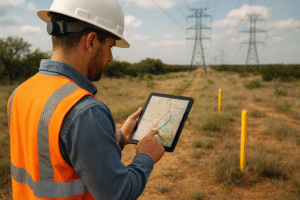
Even the most accurate legal descriptions benefit from field verification.
Professional surveys establish:
- Property boundaries
- Existing improvements
- Utility locations
- Encroachments
- Physical access
- Topographic conditions
Survey information allows engineers to develop designs based on real-world conditions rather than assumptions.
For large infrastructure corridors, this information becomes essential for minimizing construction conflicts.
GIS and Spatial Analysis
Modern GIS technology has transformed how infrastructure corridors are planned.
Instead of reviewing disconnected maps, project teams can evaluate multiple datasets simultaneously.
GIS analysis may include:
- Parcel ownership
- Existing utility corridors
- Floodplains
- Environmental features
- Municipal boundaries
- Transportation corridors
- Existing easements
- Planned developments
This comprehensive view enables better routing decisions before engineering advances too far.
It also improves communication among engineers, project managers, acquisition specialists, and stakeholders.
Early Landowner Outreach
Many acquisition challenges have little to do with legal requirements.
Instead, they stem from communication.
Property owners appreciate transparency.
When they understand project objectives, timelines, and expected impacts early, discussions tend to become more productive.
Early outreach also gives project teams time to address questions before negotiations become time-sensitive.
Strong communication builds trust while reducing misunderstandings that often delay projects.
How Collaboration Reduces Risk Before Construction Begins
One of the greatest advantages of early land rights planning is improved collaboration.
Rather than working independently, engineers, surveyors, title researchers, GIS specialists, environmental consultants, and right-of-way professionals operate as a coordinated team.
Each discipline contributes information that strengthens decision-making.
For example, survey data may reveal terrain challenges that influence engineering design. Title research may identify ownership complexities requiring additional stakeholder engagement. GIS analysis can highlight existing utility corridors that create opportunities to reduce acquisition costs by co-locating infrastructure.
When these insights are shared early, project teams avoid duplicated work and minimize costly revisions later.
This collaborative approach also supports more accurate budgeting. Instead of estimating acquisition timelines based on assumptions, organizations can forecast costs and schedules using verified property data and realistic negotiation expectations.
As a result, project owners gain greater confidence in project delivery while reducing uncertainty for contractors, regulators, and funding partners.
Common Mistakes That Delay Texas Infrastructure Projects
Even experienced project teams can encounter avoidable obstacles when land rights planning is treated as a separate phase instead of an integrated part of project development. Recognizing these common mistakes helps organizations reduce delays and improve overall project performance.
Waiting Until Design Is Finalized
One of the most frequent, and costly, mistakes is postponing land rights activities until engineering designs are nearly complete.
While this approach may seem efficient, it often results in redesigns if property ownership issues, environmental constraints, or existing easements conflict with the proposed alignment.
By engaging land rights professionals during preliminary planning, project teams can incorporate real-world property conditions into the design process from the beginning.
Underestimating the Complexity of Property Ownership
Texas has a diverse landscape of property ownership. A single parcel may involve multiple heirs, trusts, corporations, partnerships, or mineral rights holders. Some properties have ownership histories spanning decades, making title verification more challenging than anticipated.
Assuming ownership information is straightforward can delay negotiations and postpone construction. Thorough title research helps ensure the correct parties are identified before acquisition efforts begin.
Failing to Coordinate Technical Disciplines
Surveyors, engineers, GIS specialists, environmental consultants, and right-of-way professionals each contribute valuable expertise. However, when these teams work independently, critical information can be overlooked.
For example:
- An environmental constraint may affect the preferred alignment.
- Survey findings may reveal boundary discrepancies.
- GIS data may identify existing utility corridors that reduce acquisition needs.
- Title research may uncover easements that influence engineering decisions.
Regular communication between disciplines allows these discoveries to inform project decisions early rather than after plans have been finalized.
Delaying Landowner Communication
Successful projects rely on more than technical expertise, they depend on positive relationships with property owners.
Waiting until the last minute to contact landowners can create unnecessary tension and compress negotiation timelines. Early communication gives property owners time to understand the project, ask questions, and participate in the process.
Transparent, respectful engagement often leads to smoother negotiations and fewer project interruptions.
Relying on Outdated Property Information
Communities across Texas continue to experience rapid growth. Property boundaries, ownership records, development plans, and utility infrastructure can change over time.
Using outdated maps or historical records without verification increases the likelihood of conflicts during acquisition and construction.
Regularly updated surveys, GIS data, and title research help ensure project decisions are based on current information.
The Long-Term Benefits of Proactive Land Rights Planning
While early planning requires an upfront investment of time and coordination, the long-term returns often far outweigh those initial efforts.
More Predictable Project Schedules
When property issues are identified early, project managers can develop schedules based on verified information rather than assumptions.
This improves coordination with:
- Engineering teams
- Utility providers
- Contractors
- Municipal agencies
- Environmental consultants
- Regulatory authorities
Predictable schedules reduce the likelihood of cascading delays that affect multiple project phases.
Better Budget Control
Unexpected land acquisition challenges frequently lead to increased project costs.
Examples include:
- Additional survey work
- Engineering redesigns
- Legal expenses
- Extended negotiations
- Construction delays
- Contractor standby costs
Early planning minimizes these risks by identifying potential obstacles before they become expensive problems.
Improved Stakeholder Confidence
Infrastructure projects often involve numerous stakeholders, including utility companies, government agencies, private developers, consultants, investors, and landowners.
Organizations that demonstrate proactive planning inspire greater confidence among these groups.
Clear timelines, accurate property information, and coordinated project management help build trust throughout the project lifecycle.
Reduced Project Risk
Every infrastructure project carries some level of uncertainty. However, many risks associated with land acquisition are manageable through early planning.
Proactive land rights planning helps reduce:
- Ownership disputes
- Boundary conflicts
- Easement incompatibilities
- Regulatory delays
- Design revisions
- Schedule disruptions
Managing these risks early creates a more stable foundation for every subsequent phase of the project.
Why Experienced Land Rights Partners Make a Difference
Infrastructure development is increasingly multidisciplinary. No single service can address every challenge associated with acquiring land rights and preparing a project for construction.
Working with an experienced land rights partner allows organizations to coordinate multiple services through a unified strategy rather than managing separate consultants independently.
An integrated approach may include:
- Title research
- Right-of-way acquisition
- Professional surveying
- GIS and geospatial analysis
- Landowner outreach
- Easement documentation
- Project management support
When these services are coordinated from the outset, information flows more efficiently between disciplines, reducing duplicated effort and improving overall decision-making.
For organizations developing utility corridors, transportation improvements, municipal infrastructure, renewable energy facilities, or telecommunications projects across Texas, this integrated approach can help keep projects moving forward despite increasingly complex regulatory and property environments.
Conclusion
Infrastructure projects succeed when planning extends beyond engineering drawings and construction schedules. Every transmission line, pipeline, roadway, broadband network, and municipal utility improvement depends on securing the necessary land rights before work can begin.
By investing in early land rights planning, organizations gain a clearer understanding of property ownership, existing easements, environmental considerations, and stakeholder expectations. This knowledge enables better design decisions, more realistic schedules, stronger budget control, and fewer surprises during construction.
Rather than reacting to obstacles as they emerge, proactive project teams identify risks early, coordinate technical expertise across disciplines, and establish a foundation for successful project delivery.
As Texas continues to experience rapid population growth and infrastructure expansion, the importance of early land rights planning will only increase. Organizations that prioritize collaboration, accurate property information, and strategic planning are better positioned to deliver projects on time, manage costs effectively, and maintain positive relationships with the communities they serve.
For utilities, municipalities, developers, and engineering firms alike, early land rights planning is more than a preliminary task, it is a strategic investment in the success of the entire project.
FAQs
What is land rights planning?
Land rights planning is the process of identifying, evaluating, and securing the property interests required for infrastructure projects before construction begins. It often includes title research, surveying, GIS analysis, right-of-way planning, easement acquisition, and landowner engagement.
Why should land rights planning begin early?
Starting early allows project teams to identify ownership issues, existing easements, environmental constraints, and design conflicts before they create costly delays during engineering or construction.
How does land rights planning reduce project costs?
Early planning minimizes redesigns, legal disputes, construction delays, contractor downtime, and unexpected acquisition challenges. Addressing these issues proactively typically costs less than resolving them later in the project lifecycle.
Which types of projects benefit from early land rights planning?
Electric transmission, distribution, renewable energy, pipelines, telecommunications, broadband expansion, municipal utilities, transportation improvements, and other infrastructure projects all benefit from a proactive land rights strategy.
What services support effective land rights planning?
Successful planning often combines title research, professional surveying, GIS mapping, right-of-way acquisition, easement documentation, stakeholder communication, and project management into one coordinated process.