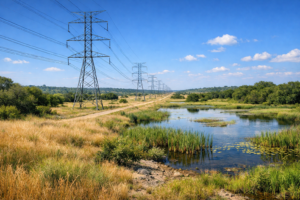
Texas landowners and developers often find themselves navigating the complexities of utility easements, which is the legal right for utility companies to use portions of private land for infrastructure. But not all easements are created equal.
A key distinction lies in whether the utility infrastructure is overhead (e.g., power lines) or underground (e.g., fiber optic cables, water mains). This decision significantly affects land use, construction flexibility, safety, aesthetics, and even property value.
In this blog, we explore how the type of utility easement, underground or overhead, directly impacts land use in Texas, helping landowners and utility planners make informed decisions.
What Are Utility Easements?
A utility easement is a legal right granted to a utility company, allowing them to install, access, and maintain infrastructure like power lines, water pipes, or telecommunications lines across private land.
Utility easements in Texas are commonly found in:
- Residential subdivisions
- Rural farmlands
- Commercial developments
- Government-owned right-of-way corridors
These easements typically persist through property sales and are recorded in property deeds or plats. Easements can be:
- Exclusive: Only one utility can use the space.
- Non-exclusive: Multiple utilities share the corridor.
The Core Differences: Underground vs. Overhead Easements
Overhead utility easements involve placing structures above ground, like:
- Electrical transmission poles
- Telephone lines
- Fiber cables on poles
Underground utility easements place infrastructure below the surface, such as:
- Water mains
- Sewer lines
- Underground fiber optics
- Buried electrical lines
This distinction is not just visual, it affects excavation, safety, maintenance access, and what landowners can build or plant near the easement.
Land Use Impacts of Overhead Utility Easements
Overhead easements are highly visible and can restrict landowners from certain improvements. Key land use limitations include:
- Height restrictions: Trees, poles, or buildings can’t encroach on clearance zones.
- Limited building proximity: Structures often need to stay a minimum distance from poles or lines.
- Aesthetic concerns: Power lines can negatively impact scenic views and property desirability.
- Drone and equipment access: Easement holders require open airspace for inspections and repairs.
In suburban Texas developments, this often results in green buffer zones or unused strips of land, reducing usable acreage.
Land Use Impacts of Underground Utility Easements
Underground easements allow for more flexibility, but come with unique constraints:
- Excavation limitations: Deep digging near utility lines requires special permits and coordination.
- No permanent structures: Driveways, patios, pools, or garages often can’t be built over them.
- Access requirements: Utility companies still need surface access for repairs, which can mean temporary disruption.
- Soil displacement issues: During installation or maintenance, soil can settle or shift, affecting landscaping and stability.
Despite these, underground utilities are typically favored in urban developments due to aesthetic benefits and weather resistance.
Texas-Specific Regulations and Standards
Texas law gives utility providers strong rights of access but also protects landowner interests. Key legal frameworks include:
- Texas Utilities Code (Title 2, Chapter 181): Defines powers of utility companies regarding easement use.
- Local permitting authorities: Counties and municipalities often have additional zoning or setback rules.
- PUC of Texas Guidelines: For electric transmission and pipeline infrastructure planning.
In many areas, developers must coordinate with TxDOT or municipal utilities to align easement locations with approved land use plans.
Cost, Maintenance, and Safety: A Comparative Look
| Factor | Overhead Easements | Underground Easements |
|---|---|---|
| Installation Cost | Lower (poles are less expensive) | Higher (requires trenching, backfilling) |
| Maintenance Access | Easier (visible, accessible) | Harder (requires excavation) |
| Weather Resilience | Vulnerable to wind, storms | Protected from weather |
| Safety Risks | Electrocution, falling lines | Dig-ins, utility strikes during digging |
While underground systems are safer from weather-related outages, they often carry higher long-term repair costs due to excavation needs.
Landowner Rights and Responsibilities
Landowners in Texas have the right to:
- Be notified of easement activity
- Access their land without undue restriction
- Seek compensation if easement use damages property value
However, they must not obstruct access or interfere with the utility’s right to maintain infrastructure.
Proactive communication and documented easement agreements can prevent future disputes.
Easement Planning for Developers and Utility Providers
For developers, the decision between underground and overhead easements affects:
- Site layout and design
- Infrastructure placement
- Permit approvals
- Project timelines and budget
A best practice in Texas is to coordinate easement corridors early in the design process and include joint-use corridors where multiple utilities share trenching or ROW.
Utility providers should offer easement sketches or GIS-based mapping to avoid overlapping easements or accidental encroachments (internal link opportunity: “How to Identify and Resolve Overlapping Easements on Texas Land”).
How Easement Type Influences Property Value in Texas
Overhead utility lines may negatively impact property value by:
- Reducing curb appeal
- Creating noise (e.g., buzzing transformers)
- Limiting development potential
Underground easements, while less obtrusive, still reduce usable land, especially in high-value areas where square footage is critical.
Appraisers often factor in:
- Visual intrusion
- Building restrictions
- Access limitations
For large tracts, utility easements may reduce usable density, impacting ROI for subdividers or builders.
Mitigating Conflict: Legal and Practical Guidance
Land use issues with easements often arise from:
- Lack of clarity in recorded documents
- Ambiguous boundaries
- Unauthorized improvements
To prevent conflict:
- Obtain as-built utility maps
- Record formal easement agreements
- Define access terms clearly
- Require notification protocols before entry
Texas courts generally uphold utility rights but favor clear documentation. Easement holders should always act in good faith to avoid inverse condemnation claims.
Historical Evolution of Utility Easements in Texas
Utility easements have been a foundational part of Texas infrastructure since the state’s earliest days of electrification and pipeline development in the 19th century. Understanding the historical context helps clarify how today’s easement laws and practices evolved and why modern landowners must pay attention to outdated, overlapping, or “phantom” easements still recorded on properties across Texas.
The Railroad and Oil Boom Eras
In the late 1800s and early 1900s, utility easements were largely informal, tied to railroad corridors, oil pipelines, and early telephone lines. Many of these rights were granted via handshake agreements or loosely recorded documents that remain on the books.
Key historical drivers:
- The Spindletop oil discovery (1901) led to pipeline easements crisscrossing southeast Texas.
- Rural Electrification Act (1936) triggered a surge in overhead power line easements, especially in rural communities.
- Telegraph and telephone expansion followed rail routes and major roadways, embedding utility infrastructure in transportation corridors.
The Rise of Regulatory Oversight
As land values rose and urban areas expanded, Texas began formalizing easement processes:
- Eminent domain laws gave utility providers more power but added due process requirements.
- Right-of-way professionals emerged to manage complex negotiations between landowners and utilities.
- Title companies began cataloging easements more rigorously, though many older easements remain poorly mapped or vaguely described.
Understanding this evolution helps modern landowners avoid surprises — like discovering a 1930s gas easement still grants access across their property.
The Role of GIS and Digital Mapping in Easement Planning
Today, Geographic Information Systems (GIS) have revolutionized how easements are identified, managed, and planned. In Texas, where land development is fast-moving and often fragmented, digital mapping is critical for preventing costly errors.
How GIS Enhances Easement Visibility
GIS integrates satellite imagery, property boundaries, and infrastructure overlays to:
- Visualize where overhead or underground utilities are located
- Analyze potential conflicts with planned construction
- Track multi-layered easements from various utility providers
- Support public transparency in municipalities and planning departments
Benefits for Developers and Utility Planners
- Accuracy: Replaces guesswork with geospatial precision
- Speed: Enables rapid scenario planning for subdivisions, pipelines, and commercial builds
- Regulatory compliance: Meets TxDOT, municipal, and PUC standards for easement recording
Some counties in Texas now require digital easement submissions for plat approvals. Landowners benefit by reducing legal ambiguity and avoiding conflicts with adjacent infrastructure projects.
The Challenge of Incomplete or Legacy Data
Many rural or older properties in Texas still lack comprehensive GIS records. ROW professionals often must:
- Digitize old paper maps
- Cross-check plats with aerial surveys
- Conduct ground-penetrating radar (GPR) for underground lines
GIS isn’t a silver bullet but it’s now a baseline requirement for any large-scale Texas land transaction involving utility easements.
Environmental and Ecological Impacts of Easement Type
Beyond land use and development issues, utility easements in Texas can have significant environmental consequences. The type of easement, overhead vs. underground, influences ecosystems, water flow, soil health, and even wildlife migration.
Overhead Easements and Ecological Fragmentation
Clearing land for power lines or poles creates linear disturbances that:
- Fragment habitats, making it harder for animals to cross
- Promote invasive species in cleared right-of-way zones
- Alter native vegetation patterns
- Increase erosion along cleared slopes or hillsides
In Central Texas Hill Country and East Texas Piney Woods, these impacts can be especially severe in sensitive watersheds and migratory paths.
Underground Easements and Subsurface Disruption
While less visible, underground utility construction can:
- Disrupt root systems and fungal networks
- Compact soil, reducing its permeability
- Interfere with aquifers or shallow groundwater
- Require large trench zones that temporarily strip the land
Environmental Regulations and Mitigation
In Texas, environmental oversight for easement projects may involve:
- Texas Commission on Environmental Quality (TCEQ)
- U.S. Army Corps of Engineers (wetlands impacts)
- Endangered Species Act for areas like the Edwards Aquifer Recharge Zone
Proper environmental planning, including biological surveys and mitigation corridors, is key, particularly for large pipeline easements and high-voltage transmission lines.
Conclusion
The choice between underground and overhead utility easements in Texas isn’t just about aesthetics, it directly impacts land use, safety, maintenance, legal exposure, and property value. Understanding the trade-offs of each helps landowners, developers, and utility planners make smarter decisions that support both infrastructure growth and land preservation.
Whether you’re subdividing land near Houston or managing rural acreage in West Texas, being informed about utility easement types puts you in control of your land’s long-term value and usability.
FAQs
What is the difference between overhead and underground utility easements?
Overhead easements involve visible structures like power poles, while underground easements use buried lines. Each affects land use and property differently.
Can I build over a utility easement in Texas?
Generally, no. Most easements prohibit permanent structures to ensure utility access. Always check local regulations and easement agreements.
How do utility easements affect property value in Texas?
Overhead lines may lower visual appeal and value. Underground easements are less visible but still reduce usable land for development.
Are utility companies allowed to access my land without notice?
Texas law typically requires advance notice, especially for non-emergency work. Easement agreements may specify access protocols.
What are my rights if a utility easement damages my land?
Landowners can seek compensation if easement use causes damage or reduces land value. Clear documentation strengthens legal claims.