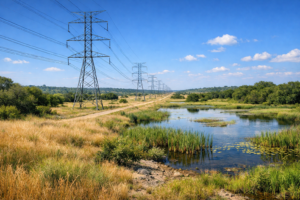
In Texas, where sprawling development intersects with critical infrastructure, understanding utility easements is essential for every landowner. One of the most common (and costly) legal headaches arises when structures or improvements unintentionally encroach on a utility easement. These encroachments can lead to fines, forced removals, or delays in development plans but they’re preventable.
This article unpacks what every landowner in Texas needs to know about utility easement encroachments: what they are, why they matter, how to identify them, and how to resolve them before they become a legal problem.
What Is a Utility Easement?
A utility easement is a legal right granted to utility providers (such as electric, gas, water, or telecom companies) to access and maintain infrastructure across private property. Easements don’t transfer ownership, but they do restrict how the landowner can use that portion of the land.
In Texas, utility easements are typically created by:
- Public dedication (via platting or municipal planning)
- Private agreement (easement deed or utility agreement)
- Court order (eminent domain or condemnation proceedings)
Understanding Easement Encroachments
An encroachment occurs when a landowner builds or places something that interferes with the intended use of the easement. It could be as minor as planting a tree or as major as constructing a fence, driveway, or even a building that overlaps the easement area.
Encroachments may be:
- Above-ground (structures, landscaping, fences)
- Below-ground (irrigation systems, concrete pads)
- Permanent or temporary (portable buildings or sheds)
Encroachments violate the terms of the easement and can trigger legal action or enforcement by the utility holder.
Common Examples of Encroachments in Texas
Some of the most frequent easement encroachments found in Texas include:
- Fences built across utility corridors
- Driveways poured over buried pipelines or cables
- Swimming pools or patios constructed too close to utility lines
- Trees or large shrubs planted in transmission or access zones
- Storage sheds, garages, or barns overlapping easement boundaries
These situations often arise from misunderstanding property boundaries or failing to conduct a proper land survey before construction.
Why Encroachments Matter: Legal and Practical Risks
Encroachments can have serious consequences, including:
- Forced removal of structures at the landowner’s expense
- Access obstruction for emergency utility repairs
- Increased liability if damages or injuries occur on obstructed easements
- Property devaluation due to legal uncertainty
- Delays in development or permitting issues with local authorities
For utility providers, encroachments can delay infrastructure upgrades, emergency response, and regulatory compliance all of which escalate risk.
How to Identify a Utility Easement on Your Property
To avoid encroaching on a utility easement, landowners should take the following steps:
- Check your property deed and title report – Easements are often recorded in these documents.
- Order a current land survey – A professional boundary survey will clearly mark existing easements.
- Review the plat map – Particularly in subdivisions, platted easements are visible in county records.
- Contact local utility companies – They can confirm active easement locations or required setbacks.
- Consult a real estate attorney or land professional – If there’s any uncertainty, professional advice is key.
How Texas Law Handles Easement Encroachments
Under Texas law, an easement is a legally protected interest in land. Interfering with that interest can lead to:
- Cease-and-desist orders
- Court-mandated structure removal
- Claims for damages (if access is obstructed and harm results)
- Injunctions filed by utility companies to prevent use of the encroached area
Texas courts generally side with utility easement holders, especially when clear documentation exists.
Importantly, the law does not favor ignorance. A property owner who builds without verifying easement boundaries is still liable regardless of intent.
Resolving an Encroachment: Step-by-Step for Landowners
If you discover, or are notified, that you’ve encroached on a utility easement, take these steps:
- Confirm the Easement Boundaries
Use a licensed land surveyor to verify where the easement lies. - Assess the Impact of the Encroachment
Does the structure truly interfere with utility access or safety? - Contact the Easement Holder
Some utility companies allow minor encroachments with written agreements (license or variance). - Negotiate a Resolution
Options may include:- Structure removal or relocation
- Modification to allow utility access
- Legal easement reconfiguration (rare, but possible)
- Document the Resolution
Any agreement must be recorded with the county to be legally binding.
Preventing Future Encroachments: Best Practices
To avoid future conflicts, landowners should:
- Always survey before building
- Mark easement zones permanently
- Avoid planting trees or installing fences in unverified areas
- Communicate with utility companies before major improvements
- Educate contractors about boundaries and restrictions on-site
Prevention is significantly cheaper and easier than remediation.
The Role of Land Surveyors and GIS Experts
Surveyors play a crucial role in identifying utility easements. In complex or urban areas, GIS mapping specialists add another layer of clarity by:
- Digitally mapping utility corridors
- Detecting conflicts between structures and easements
- Supporting legal exhibits or real estate transactions
Engaging a surveying firm early in the planning process is essential for any development, sale, or infrastructure project in Texas.
What to Do If You’re Accused of Encroaching on a Utility Easement
If a utility provider or neighbor accuses you of encroaching:
- Stay calm and gather documents
- Request written notice detailing the claim
- Hire a licensed surveyor for an independent assessment
- Consult a real estate attorney to understand your rights
- Avoid further construction or removal until the facts are verified
A proactive and professional approach usually leads to a smoother, more favorable resolution.
Case Studies: Real Encroachment Disputes in Texas and Their Outcomes
Texas has no shortage of land use conflicts and encroachment on utility easements is one of the most common. Real-world case studies offer a powerful lens into how these disputes unfold, the legal and financial consequences, and the practical lessons for both landowners and utility companies.
Case Study 1: Subdivision Fence Blocks Electrical Line Access
Location: Fort Worth, TX
Summary: A homeowners’ association (HOA) approved a decorative perimeter fence along a shared boundary of a residential subdivision. Unfortunately, the fence was installed directly over a buried electrical easement used by the local utility company. The easement, recorded 30 years earlier, had not been disclosed to the HOA during their planning process.
Outcome:
- The utility company issued a formal demand for removal.
- The HOA attempted to claim estoppel due to lack of notice, but the easement was legally recorded.
- A court injunction ordered the removal of the fence at HOA expense (estimated at $22,000).
- The HOA implemented a new protocol requiring land survey verification before any future development.
Lesson: Recorded easements are legally binding regardless of knowledge. Landowners and HOAs must always verify records before building.
Case Study 2: Metal Workshop Over Pipeline Easement
Location: Bryan, TX
Summary: A landowner built a metal workshop near the back of his rural property, unknowingly encroaching on a gas transmission line easement. The structure was only partially within the easement boundary, about 10 feet, but directly over the access route.
Outcome:
- The pipeline operator issued a stop-use notice and requested removal.
- The landowner hired a surveyor to confirm the encroachment and sought legal advice.
- After negotiations, the utility agreed to allow the structure to remain with modifications that provided access, including a removable fence panel and a new gravel path.
- A formal license agreement was recorded.
Lesson: In some cases, flexible utility holders may permit minor encroachments if access is preserved and the risk is low. Clear communication and legal documentation are key.
Case Study 3: Developer Ignored Easement in Site Plan
Location: San Antonio, TX
Summary: A commercial developer designed and permitted a retail plaza without accounting for an active drainage easement cutting across a corner of the lot. The civil engineering plans showed incorrect property lines, and the easement was not flagged during permitting.
Outcome:
- During construction, city inspectors halted the project after noticing utility conflicts.
- The developer was forced to halt construction for six months and redesign part of the structure.
- The redesign reduced leasable square footage by 8% and cost over $140,000 in delays and design changes.
- The developer later sued the civil firm for negligence.
Lesson: Even professional consultants can make costly mistakes. Developers should conduct independent due diligence on easement records and use professional surveyors before construction begins.
These cases demonstrate that proactive identification, expert support, and legal caution are essential to avoid the real and costly consequences of easement encroachments.
Understanding Temporary vs. Permanent Easement Encroachments
Not all easement encroachments are created equal. In Texas, the duration and nature of an encroachment often determine the legal outcome and whether the issue can be resolved amicably or requires litigation.
What Is a Temporary Encroachment?
A temporary encroachment involves:
- Portable or movable structures (e.g., sheds, storage containers)
- Seasonal or time-limited use (e.g., staging areas during renovation)
- Landscaping features (e.g., temporary fencing, gardening equipment)
Temporary encroachments may not always violate easement rights unless they interfere with access. Many utilities issue warnings first and request removal, especially if the risk is low and no damage has occurred.
What Is a Permanent Encroachment?
A permanent encroachment involves:
- Fixed, immovable structures (e.g., garages, concrete pads, pools)
- Foundations or underground utility connections
- Any alteration that changes access or use of the easement long-term
These are taken more seriously under Texas law. Courts are more likely to order removal, especially if access, safety, or utility functionality is compromised.
How Do Utilities Respond Differently?
- Temporary Encroachments may result in a written warning, followed by a compliance window.
- Permanent Encroachments are more likely to trigger legal enforcement, especially in areas with critical infrastructure.
Legal Distinctions Matter
Texas law does not always draw a hard line between temporary and permanent, the key test is “interference with easement use.” Even a seemingly minor structure can be considered an encroachment if it:
- Prevents maintenance
- Limits emergency access
- Violates the terms of the easement deed
Mitigation Strategy
Landowners should request a temporary use agreement or encroachment license if they need to place items in or near an easement. These agreements typically outline:
- Duration
- Access requirements
- Removal clauses
- Liability waivers
A formal agreement protects both parties and avoids costly misunderstandings.
Conclusion
Encroachments on utility easements are one of the most misunderstood issues facing Texas landowners. But with the right knowledge and expert support these conflicts are avoidable, manageable, and often preventable.
By understanding your easement boundaries, verifying before building, and working with professionals, you can protect your property value, avoid legal disputes, and ensure safe utility access for everyone involved.
FAQs
What counts as an encroachment on a utility easement in Texas?
Any structure or object, like fences, buildings, or trees, that interferes with the use or access of the easement.
Can I build over a utility easement on my property?
Generally no. Building over an easement without utility company permission can lead to forced removal or legal action.
How can I find out if there’s an easement on my land in Texas?
Review your deed, consult the county plat map, or hire a land surveyor to confirm.
What happens if I accidentally encroach on a utility easement?
You may be asked to remove the structure, pay damages, or negotiate an agreement — depending on the severity and utility company policy.
Can easement boundaries ever be changed?
Rarely, but it may be possible with a legal amendment or release by the easement holder.